When you compare power stations or balcony batteries, two things always appear in the spec sheet: the battery chemistry and the cycle life. All VOLTBOX products with a battery use LiFePO4. We explain what this means, how cycles translate into years of use and what you can do to make the battery last as long as possible.
What is a LiFePO4 battery?
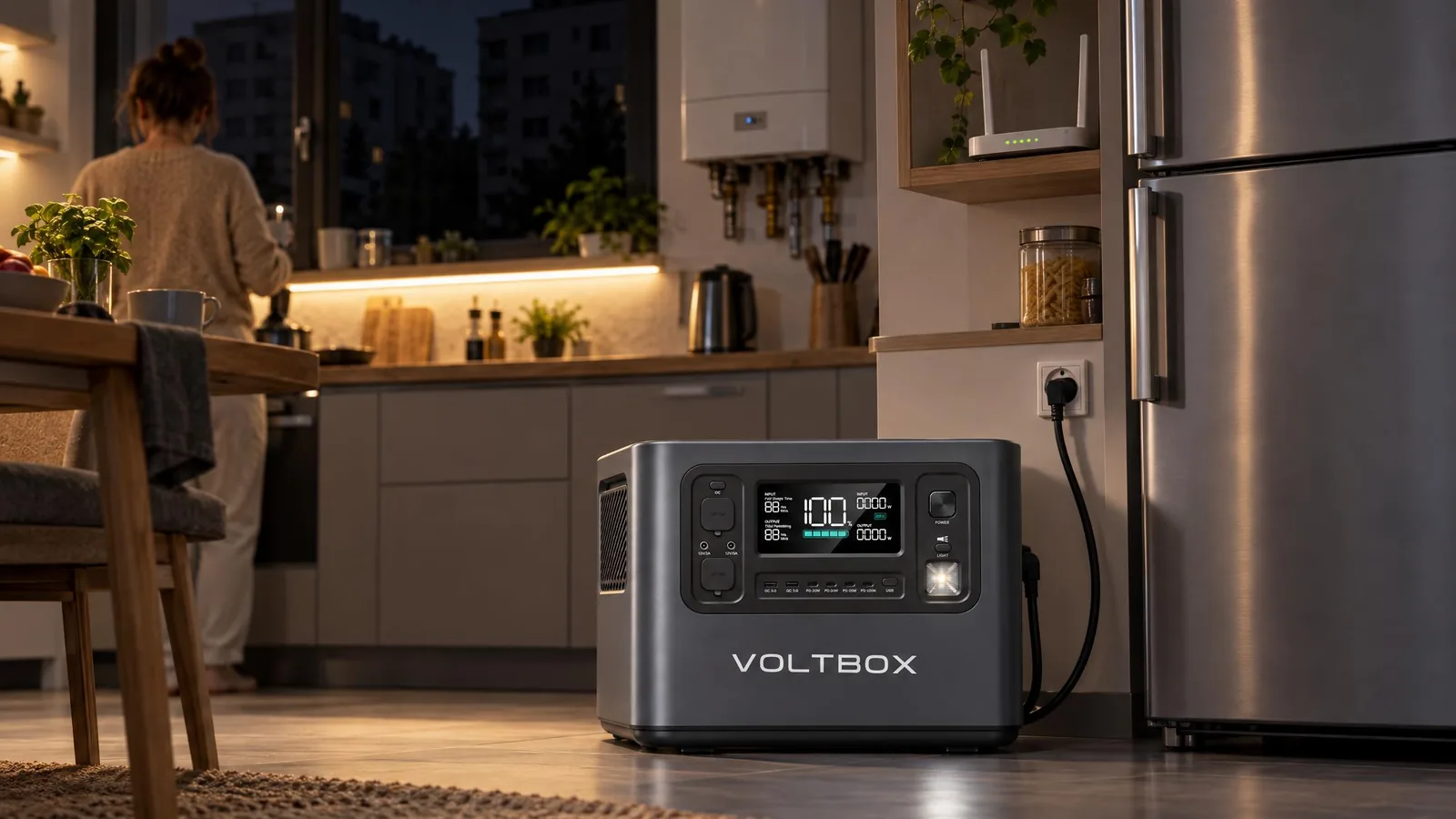
LiFePO4 stands for lithium iron phosphate. It is a battery from the lithium-ion family whose cathode is made of lithium iron phosphate instead of the nickel-, manganese- or cobalt-based compounds used in many phone and laptop batteries. A LiFePO4 cell has a nominal voltage of 3.2 V, a value you can also see in the spec sheet of the VOLTBOX 100W power station: 31,000 mAh at 3.2 V, i.e. 31 Ah × 3.2 V = 99.2 Wh.
The same rule, Ah × V = Wh, applies to any battery:
- VOLTBOX SR5000: 100 Ah × 51.2 V = 5,120 Wh;
- VOLTBOX EZ2000: 50 Ah × 48 V = 2,400 Wh.
That is why, when you compare batteries, you should look at Wh, not just Ah. A 100 Ah battery at 12 V holds 1,200 Wh, less than a quarter of the 5,120 Wh of a 100 Ah battery at 51.2 V.
Why the chemistry matters
- Many cycles: LiFePO4 withstands significantly more charge cycles than the standard lithium-ion batteries used in electronics, and far more than lead-acid batteries.
- Thermal stability: the iron phosphate structure is stable, and the battery is less prone to overheating than other lithium chemistries. This matters for equipment that stays in your home or on your balcony for years.
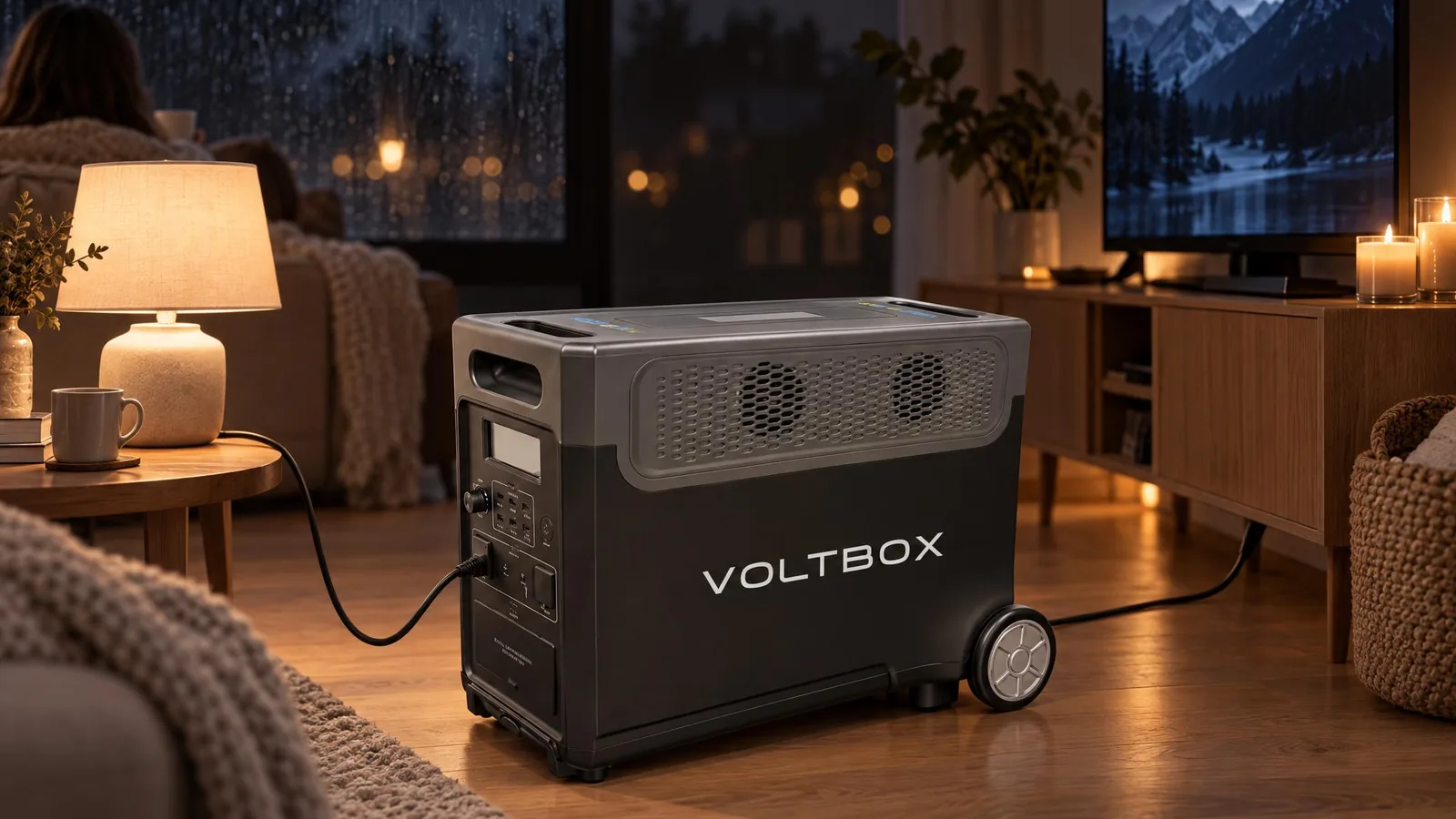
- The downside: weight. For the same energy, LiFePO4 is heavier. Including the casing and electronics, the VOLTBOX 2400W power station offers about 93 Wh per kilogram (2,048 Wh for 22 kg), the 3600W power station 96 Wh/kg (3,840 Wh for 40 kg) and the EZ2000 extension about 114 Wh/kg (2,400 Wh for 21 kg).
What a charge cycle means
A full cycle means charging and discharging the equivalent of 100% of the capacity. It does not have to happen all at once: two discharges of 50% each add up to one cycle. Manufacturers usually state the number of cycles until the battery reaches a certain percentage of its original capacity. Beyond this threshold the battery does not stop working; it simply holds less charge.
The figures from the VOLTBOX spec sheets:
| Product | Capacity | Cycle life |
|---|---|---|
| VOLTBOX 100W | 99.2 Wh | over 2,000 |
| VOLTBOX 3600W | 3,840 Wh | minimum 3,000 |
| VOLTBOX 2400W | 2,048 Wh | minimum 3,500 |
| VOLTBOX EZ2000 | 2,400 Wh | 6.000 |
| VOLTBOX SR5000 | 5,120 Wh | over 6,000 |
There is a clear difference between the portable power stations and the batteries designed for balconies, which are charged and discharged almost daily: the EZ2000 and SR5000 are rated for 6,000 cycles or more.
How cycles translate into years
- One full cycle a day, as with a balcony system that charges during the day and discharges at night: 3,500 cycles means about 9.6 years, and 6,000 cycles about 16.4 years.
- One cycle a week, for weekends spent at the cabin: 3,000 cycles would mean over 57 years. With such infrequent use, the battery ages because of time rather than cycles.
- Occasional power cuts: a few cycles a year. Here the number of cycles practically does not matter; what matters is how you store the battery between uses.
Another way of looking at cycles is the total energy the battery can deliver over its lifetime. A simplified calculation, without losses and without the gradual decline in capacity: 2,048 Wh × 3,500 cycles ≈ 7,168 kWh for the 2400W power station. For the SR5000, at a depth of discharge of 90%: 5,120 Wh × 0.9 × 6,000 ≈ 27,648 kWh.
Depth of discharge and usable capacity
Depth of discharge (DoD) shows how much of the capacity you actually use in a cycle. For the SR5000 it is 90%: of the 5,120 Wh, you use about 4,608 Wh, and the rest remains as a reserve that protects the battery. Do not confuse DoD with the 85% we use in the configurator on the site for portable power stations: that refers to the losses when converting to 230 V, in other words how much energy actually reaches your appliances.
The BMS, the brain of the battery
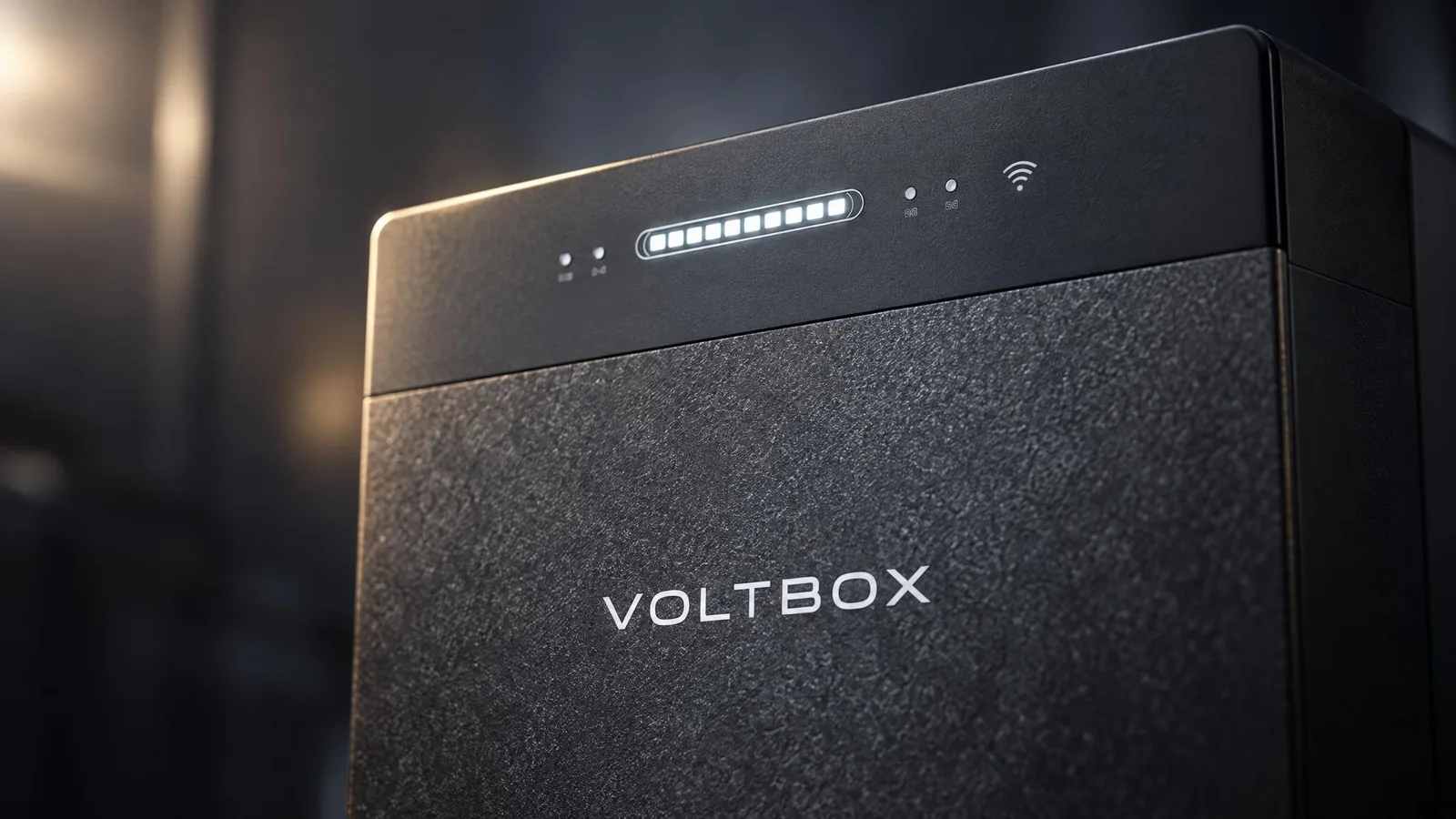
The battery management system (BMS) monitors the cells: it balances them, stops charging when the battery is full and discharging when it is empty, and steps in when the current or temperature goes outside the limits. The 3600W power station and the SR5000 have an advanced BMS, the 2400W power station has built-in overload and short-circuit protection, and the SR5000 and EZ2000 also have a heating function for low temperatures.
How to look after a LiFePO4 battery
- Cold: avoid charging portable power stations below 0 °C. The spec sheets for the VOLTBOX 100W and 400W power stations specify charging between 0 °C and 40 °C. In winter, bring the power station indoors and let it warm up before you put it on charge. The SR5000 and EZ2000 have built-in heating and work from -20 °C.
- Heat: do not leave the power station in the sun or next to a radiator. The 100W, 400W, 2400W and 3600W power stations have an operating temperature range of -10 °C to 40 °C.
- Storage: if you are not going to use it for months at a time, keep it about half charged, in a dry place, and check it every few months.
- Daily use: there is no need to discharge it fully before charging. LiFePO4 batteries have no "memory effect", so you can recharge them at any time.
What to check in a battery's spec sheet
- Chemistry: LiFePO4, if you want many cycles and thermal stability.
- Capacity in Wh, not just in Ah.
- Number of cycles and, if stated, the capacity threshold it refers to.
- Depth of discharge, so you know how much energy you actually use.
- Charging and operating temperatures, especially if the battery is kept on a balcony or at a cabin.
- Certifications: for example, the 3600W power station and the EZ2000 extension list UN38.3 in their spec sheets, the UN set of tests for the safe transport of lithium batteries.
In short: LiFePO4 is the right choice for an energy reserve you want to use for many years. See the VOLTBOX power stations, from VOLTBOX 2400W to VOLTBOX 3600W, or, for balcony storage, the VOLTBOX SR5000 battery and the EZ2000 extension.